

Durable Dog Toys for Aggressive Chewers: 2026 Guide
Table of Contents
- How to Tell If Your Dog Is an Aggressive Chewer
- Safe Materials for Aggressive Chewers
- How to Choose the Right Size Durable Dog Toys
- Indestructible Dog Toys for Large Breeds: What to Look For
- How to Keep Aggressive Chewers Entertained
- Safety Precautions and Signs of Toy Wear and Tear
- Conclusion: Building a Rotation of Durable Dog Toys
- Frequently Asked Questions
Last Updated: October 3, 2026
How to Tell If Your Dog Is an Aggressive Chewer
A dog is an aggressive chewer when it destroys standard toys within minutes to days, works through layered materials, and keeps chewing after the novelty fades.
Grooming-inspired toys can be built for exactly these dogs. The difference is rarely size: a determined 12 kg terrier can out-chew a lazy 40 kg retriever.
Watch for three signals:
- Toys rated "tough" fail within a single session
- Your dog targets seams, squeakers, and edges first
- Chewing continues long after food or treats are gone
If all three apply, you are shopping for durable dog toys for aggressive chewers, not standard retail toys.
Jaw Strength, Bite Force, and Breed Profiles
Bite force and jaw shape matter more than body weight. Dogs with broad, short skulls, terriers, bulldogs, many mastiff types, apply crushing pressure, while sighthounds and toy breeds usually nibble.
Breed profiles are a useful starting point, not a verdict:
- Terriers: relentless, fast destroyers; need dense, thick-walled toys
- Retrievers and spaniels: steady chewers; do well with natural rubber
- Bulldog and mastiff types: high crushing pressure; need the densest materials
- Herding breeds: chew from boredom more than jaw strength
A common mistake is buying for weight class alone. Match the toy to jaw style and chewing habit, not the number on the bag.
Behavioral Root Causes of Destructive Chewing
Destructive chewing is usually a behavior problem wearing a durability costume. Puppies chew through teething discomfort; adult dogs chew from boredom, under-stimulation, separation stress, or rewarded attention. If your dog destroys a toy in ten minutes and then stares at you, the toy was never the issue, it needs enrichment, exercise, or both. Solving durability without solving boredom just moves the destruction to your sofa.
Safe Materials for Aggressive Chewers
Safe materials for aggressive chewers are non-toxic, phthalate-free, and dense enough to resist puncturing. Natural rubber and food-grade nylon lead the category; density, not thickness alone, decides how long a toy survives.
What to look for:
- Natural rubber: flexible, tear-resistant, gentle on enamel
- Food-grade nylon: hard, long-lasting, best for determined chewers
- Material density: heavier for its size usually means tougher
What to avoid:
- Thin plastic that shatters into sharp edges
- Toys with glued-on parts or loose squeakers
- Anything soft enough to swallow in chunks
Natural Rubber, Nylon, and Material Density
Natural rubber flexes under bite force, resisting tearing instead of cracking. Nylon holds its shape under sustained pressure, suiting heavy chewers who grind rather than bite. Density is the tiebreaker: the heavier of two same-size toys generally lasts longer.
Check for non-toxic, phthalate-free labeling before purchase. FDA guidance on animal chews and pet products outlines what manufacturers should disclose about pet product materials, and it is worth a quick read before you commit to a brand.
How to Choose the Right Size Durable Dog Toys
The right size is the largest toy your dog can comfortably hold in its mouth without being able to swallow it. Too small creates a choking hazard.
Use this quick sizing guide:
| Dog Size | Toy Size | Rule of Thumb |
|---|---|---|
| Small (under 10 kg) | Small to medium | Fits easily, cannot be swallowed |
| Medium (10-25 kg) | Medium to large | Slight jaw stretch to grip |
| Large (25-40 kg) | Large | Full mouth hold, no strain |
| Giant (40 kg+) | Extra large | Wide enough to prevent swallowing |
Size-appropriate toys also protect dental health. A toy that is too hard or too small encourages frantic chewing and can chip teeth. When in doubt, size up, then supervise the first session closely.
Indestructible Dog Toys for Large Breeds: What to Look For
No toy is truly indestructible, and any brand claiming otherwise is overselling. What you can find are toys built to survive heavy chewers far longer than standard options: solid construction, no glued seams, and a single-piece design.
Your checklist:
- One-piece build with no detachable parts
- Dense natural rubber or food-grade nylon
- Rounded edges that will not cut gums
- A stated safety standard or material certification
- Dishwasher-safe for easy cleaning
How to Keep Aggressive Chewers Entertained
How to keep aggressive chewers entertained comes down to mental stimulation, not more toys. A bored power chewer will destroy anything within reach, including the toys you just bought, so enrichment and interactive play must target the right kind of boredom.
Match the Outlet to the Behavior
Destructive chewing is rarely one problem. It is usually one of four, and each responds to a different kind of enrichment.
- Under-stimulation. The dog has energy and nowhere to put it. Fix: physical work, structured tug, fetch, flirt pole, or a long sniff-heavy walk. A tired dog chews less.
- Cognitive boredom. The dog is physically tired but mentally underworked. Fix: problem-solving, puzzle feeders, snuffle mats, hide-and-seek with kibble, or training games that require decisions.
- Teething discomfort. Puppies and adolescents chew for relief. Fix: cold, textured items, frozen rubber toys, frozen broth cubes, chilled carrots for dogs who tolerate them.
- Stress or separation-related chewing. The dog chews to self-soothe, often at exits, crates, or items that smell like you. Fix: this is a behavior issue, not a toy issue. Enrichment helps, but a veterinarian or certified behavior consultant should be involved if the pattern is consistent.
If you cannot tell which category your dog falls into, keep a week of notes: when the destruction happens, what the dog was doing before, and what was destroyed. Patterns emerge quickly and tell you which outlet to add.
DIY Enrichment Alternatives That Actually Work
You do not need to buy something for every session. These are low-cost, safe, and genuinely engaging for most power chewers.
- Muffin-tin puzzle. Drop treats or kibble into a muffin tin and cover each cup with a tennis ball. The dog has to lift and nose the balls aside. Supervise, because some dogs will chew the tennis balls.
- Cardboard dig box. A shallow box filled with crumpled paper, cardboard tubes, and a few treats scattered through. Great for shredders, but only for dogs who do not eat cardboard, if yours swallows it, skip this one.
- Frozen stuffed rubber toy. Pack a stuffable natural rubber toy with a mix of kibble, plain yogurt, and a little peanut butter (xylitol-free), then freeze. This is the single highest-value DIY option for most heavy chewers because it combines chewing, licking, and duration.
- Frozen broth cube. Low-sodium, onion- and garlic-free broth frozen in a silicone mold. Good for teething puppies and for dogs who need a short, cooling chew.
- Snuffle setup. Scatter kibble through a folded blanket or a dedicated snuffle mat. Slows eating and works the nose, which is genuinely tiring for dogs.
- Towel roll. Roll kibble into a damp towel, twist it, and freeze. The dog has to unroll and dig it out. Supervise closely, this is a shredding activity, and some dogs will eat the towel.
Rotate these the same way you rotate toys. Novelty is part of the value, and a DIY option that is new to the dog often beats a store-bought toy it has seen for weeks.
Interactive Play Beats Solo Chewing
For most heavy chewers, fifteen minutes of structured interactive play does more for destructive behavior than a new toy.
- Structured tug, rules-based, with a clear start and stop cue, so the dog is working with you rather than just gripping. This is also a useful impulse-control exercise.
- Fetch with a purpose, not just throwing a ball, but asking for a sit, a wait, and a release before each throw. The thinking is the tiring part.
- Flirt pole, a lure on a rope that the dog chases. High output, short duration, and excellent for dogs who need to sprint but cannot be off-leash.
- Training games, nose work, trick chains, or simple shaping exercises. Five minutes of shaping tires a dog more than thirty minutes of fetch for many breeds.
Pair interactive sessions with solo enrichment toys: the solo toy handles the hours you cannot actively engage, while the interactive session handles the drive a solo toy cannot satisfy.
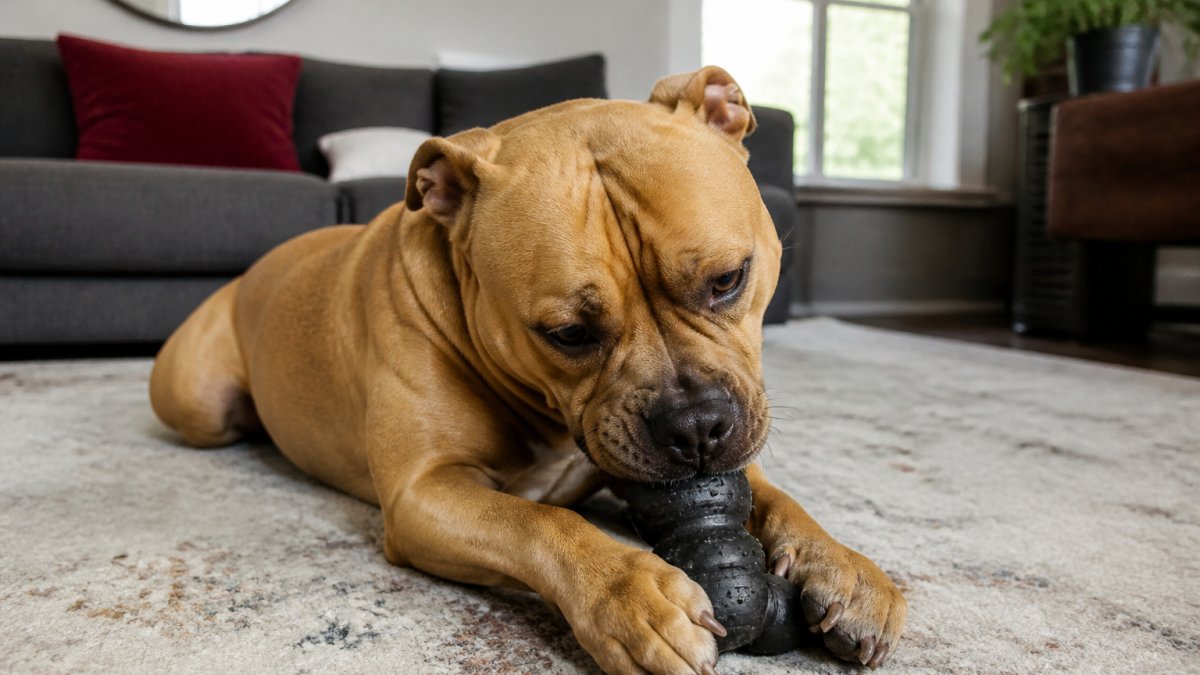
Tonsor Pawber Lounge™ offers barber-inspired designs. The Gold Paw Club™ gives members priority access to new designs as they release. Boredom is a behavior problem, and a genuinely engaging toy is part of the fix, but it is only part. The rest is the routine you build around it.
Safety Precautions and Signs of Toy Wear and Tear
Supervision is the single most important safety rule, but "supervise your dog" is not a protocol. A power chewer can swallow a chunk of rubber or nylon faster than most owners expect, and the difference between a safe session and an emergency visit usually comes down to what you check before the toy hits the floor.
A Pre-Session Inspection Protocol
Run this 30-second check before every chew session. It catches the failures that matter most.
- Flex the toy. Bend it in both directions. Cracks that are invisible at rest open up under stress, if you can see a split when you flex, the toy is done.
- Run a thumb along every edge. Look for gouges deeper than a few millimeters, lifted flaps, or rough spots that could abrade gums.
- Press the seams and caps. Glued joints and end caps are the first things to fail on hollow toys. If a cap rotates or a seam lifts, retire it.
- Shake it next to your ear. A rattle inside a supposedly solid toy means internal structure has broken down. That is a swallow risk, not a squeak.
- Check the size against your dog's throat. If any fragment you can imagine breaking off would fit flat in your dog's mouth, the toy is too small for unsupervised use.
How Different Materials Fail
Understanding failure modes helps you predict which toys are near the end of their life.
- Natural rubber typically fails by tearing at stress points, around holes, around the opening of a stuffable toy, or along a molded seam. It rarely shatters, which is one reason it is favored for heavy chewers.
- Food-grade nylon fails by wearing down into rough, jagged edges or by snapping when a dog has worked a groove deep enough to create a hinge point. Nylon does not flex, so it gives no warning before it breaks.
- Composite or multi-part toys fail at the joints. Any toy with a glued squeaker, a screwed-on cap, or a stitched fabric overlay is a multi-part toy, and the joint is where it will come apart.
- Fabric and plush "tough" toys fail by shredding into strips, which are a linear foreign-body risk if swallowed. These are not appropriate for a confirmed aggressive chewer regardless of marketing.
When to Retire a Toy
Retire a toy immediately if you see any of the following:
- Cracks, splits, or deep gouges that open when flexed
- Loose, missing, or exposed internal parts (squeakers, rattles, weights)
- Sharp edges or rough texture from chewing
- Any piece that has already broken off, even a small one
- A change in your dog's interest, sudden disinterest in a previously favorite toy can mean it has started to taste or feel wrong
Replace on condition, not on calendar. A toy that survived months of light chewing may fail in a week under a heavy chewer, and a toy that looks fine on the outside can be structurally compromised inside. If you are unsure, err toward retiring it.
Hygiene and Dental Considerations
Wash dishwasher-safe toys regularly, weekly for toys that go in the mouth daily, and more often for stuffable toys that held food. Residual food, saliva, and biofilm build up in crevices and around squeaker holes, and a dirty toy is a bacterial load your dog is repeatedly exposed to.
Dental health cuts both ways. A toy that is too hard can chip or fracture teeth, particularly the carnassial teeth and canines; too soft and it offers no cleaning benefit and shreds quickly.
ASPCA pet care and safety resources offers practical guidance on safe chew items and choking prevention, and AVMA pet health and safety information covers dental health and safe play habits for dogs.
Conclusion: Building a Rotation of Durable Dog Toys
The real challenge is not finding one tough toy but building a rotation that keeps a power chewer engaged, safe, and mentally satisfied week after week. Buy for jaw style, match the size, supervise every session, and retire toys the moment they show wear.
Tonsor Pawber Lounge™ offers barber-inspired durable dog toys with a premium aesthetic. Gold Paw Club™ members get early access to limited founder releases and priority previews of new designs. Log in to join the community and give your dog a rotation worth chewing through.
Frequently Asked Questions
What are some chew toys that don't break my dog's teeth?
Look for toys made from natural rubber or flexible nylon that give slightly under pressure. Avoid anything harder than your dog's tooth enamel, like antlers, hooves, or dense plastic bones. A good test: if you can't indent the material with a fingernail, it's likely too hard. Durable dog toys with some flex absorb bite force instead of cracking teeth, and they're safer for power chewers who bite down hard.
How can I tell if a dog toy is truly indestructible?
No toy is truly indestructible, but durable ones share traits: high material density, reinforced seams, and a design with no small parts that can tear off. Check for non-toxic, phthalate-free labeling and look for toys rated for heavy chewers. Even the toughest toy needs supervision. Inspect it weekly for cracks, missing chunks, or exposed edges, and replace it at the first sign of wear and tear.
How do I keep an aggressive chewer entertained without a new toy every week?
Rotate three to four durable toys so each one feels new when it comes back out. Add mental stimulation with food-stuffed rubber toys, frozen treats, or snuffle mats. Interactive play like tug or fetch burns energy too. Pairing enrichment with a solid rotation reduces boredom, which is often the real driver behind destructive chewing, and it stretches the life of every toy you buy.
How often should I replace durable dog toys for aggressive chewers?
Replace any toy showing cracks, missing pieces, or exposed inner material immediately, regardless of age. For heavy chewers, inspect toys weekly and expect a replacement cycle of weeks to a few months depending on jaw strength and play style. Dishwasher-safe rubber toys can be cleaned and reused longer, but once the structure weakens, swap it out to avoid a choking hazard.